Choose the Best SEO Agency | Expert Tips for Hiring
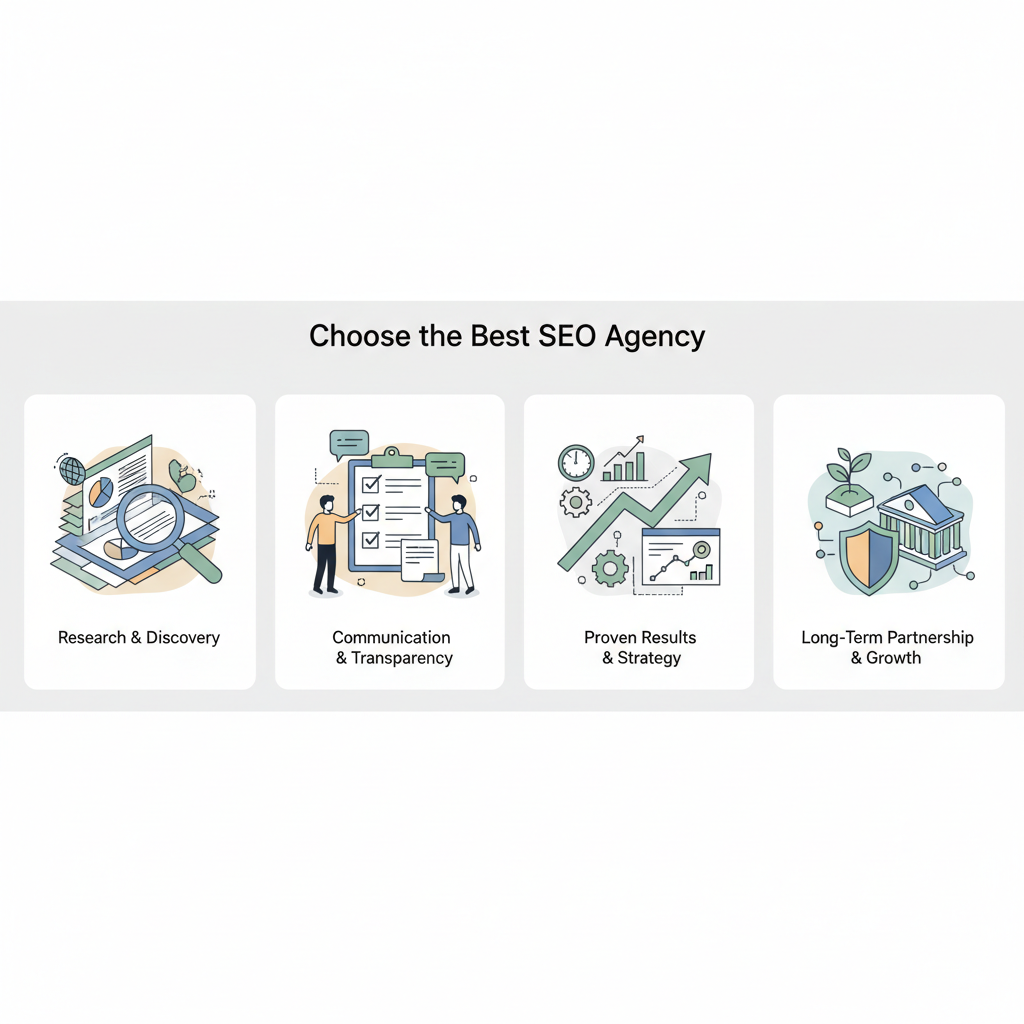
Selecting an SEO agency is a critical decision for any business aiming to enhance its online visibility and digital footprint. The landscape of Search Engine Optimization (SEO) is dynamic, evolving rapidly with algorithm updates, emerging technologies like AI in search, and changing user behaviors. What constituted effective SEO in 2016 is vastly different from the strategies required in 2026. This guide provides a comprehensive framework to navigate the selection process, ensuring you partner with an agency that can deliver tangible, sustainable results.
Historically, SEO began as a technical discipline focused on keyword stuffing and link manipulation. Over time, it matured into a holistic practice encompassing technical optimization, content strategy, user experience (UX), and brand authority. Today, a robust SEO strategy integrates seamlessly with broader digital marketing efforts, recognizing that search engines prioritize relevance, authority, and the best possible user experience. Understanding this evolution is key to identifying an agency that operates with a forward-thinking, ethical methodology.
1. Define Your SEO Goals and Budget
Before engaging with any agency, clarity regarding your objectives is paramount. What do you hope to achieve through SEO? Common goals include increased organic traffic, higher search engine rankings for specific keywords, improved lead generation, enhanced brand visibility, or better conversion rates from organic channels. Quantify these goals where possible (e.g., “increase organic traffic by 30% within 12 months,” “rank in the top 3 for five high-intent keywords”).
Your budget will significantly influence the type of agency you can afford and the scope of services they can provide. SEO services can range from a few hundred dollars per month for basic local SEO to tens of thousands for comprehensive enterprise-level strategies. Be realistic about what your budget can achieve and communicate it transparently. A clear budget helps agencies propose appropriate strategies and avoids wasted time on proposals that are out of sync with your financial capacity.
2. Understand Core SEO Concepts and Agency Offerings
A basic understanding of SEO terminology and practices will empower you to evaluate agency proposals more effectively. Key areas include:
- Technical SEO: Optimizing website infrastructure for crawlability, indexability, site speed, mobile-friendliness, and structured data. With Google’s continuous emphasis on Core Web Vitals and site experience, technical SEO remains foundational in 2026.
- On-Page SEO: Optimizing individual web pages for specific keywords and user intent, including content quality, keyword integration, meta tags, and internal linking.
- Off-Page SEO: Activities performed outside your website to improve search engine rankings, primarily through link building (acquiring high-quality backlinks from authoritative sites) and brand mentions.
- Content Strategy: Planning, creating, and distributing valuable, relevant, and consistent content to attract and retain a clearly defined audience. This often includes blog posts, articles, videos, and infographics, all optimized for search.
- Local SEO: Optimizing a business’s online presence to attract more local customers, crucial for brick-and-mortar businesses. This involves Google Business Profile optimization, local citations, and localized content.
- Analytics & Reporting: The ability to track, measure, and report on SEO performance using tools like Google Analytics 4, Google Search Console, and various third-party SEO platforms.
In 2026, many agencies also offer specialized services like AI content optimization, voice search optimization, and E-E-A-T (Experience, Expertise, Authoritativeness, Trustworthiness) enhancement strategies, reflecting the sophisticated nature of modern search algorithms.
3. Evaluate Agency Experience and Specialization
Look for agencies with a proven track record. This isn’t just about how long they’ve been in business, but the depth and relevance of their experience. Consider:
- Industry Experience: Does the agency have experience working with businesses in your industry? While not always mandatory, industry-specific knowledge can accelerate strategy development and implementation.
- Case Studies and Testimonials: Request detailed case studies showcasing their successes. Look for quantifiable results (e.g., “increased organic traffic by X%,” “achieved Y rankings for Z keywords”). Testimonials provide social proof, but case studies offer more in-depth insights.
- Team Expertise: Inquire about the team members who will be working on your account. What are their qualifications, certifications, and areas of specialization? A good agency will have a diverse team with expertise in various facets of SEO.
- Specialization: Some agencies specialize in specific areas like technical SEO, content marketing, or local SEO. If your primary need is, for example, fixing core web vital issues, an agency with strong technical SEO specialization might be a better fit than a generalist.
4. Assess Their SEO Methodology and Ethics
A reputable SEO agency employs ethical, “white hat” techniques that align with search engine guidelines. Avoid agencies that promise instant results or guarantee top rankings, as these are often indicators of “black hat” tactics that can lead to penalties and long-term damage to your site’s visibility. In 2026, search engines are more sophisticated than ever at detecting manipulative practices.
Ask about their process:
- How do they conduct initial audits?
- What is their keyword research methodology?
- How do they approach content creation and optimization?
- What are their link-building strategies? Are they transparent and ethical?
- How do they stay updated with algorithm changes?
A good agency will articulate a clear, data-driven methodology that emphasizes sustainable growth, user experience, and long-term value. They should be able to explain how their strategies adapt to major updates like Google’s helpful content system and core updates.
5. Inquire About Communication and Reporting
Effective communication is vital for a successful agency-client relationship. Discuss their communication protocols:
- How often will you receive updates?
- What channels do they use (email, phone, video calls)?
- Who will be your primary point of contact?
- What kind of reports do they provide?
- How frequently are reports generated (monthly, quarterly)?
Reports should be comprehensive, easy to understand, and directly tied to your defined goals. They should include key performance indicators (KPIs) such as organic traffic, keyword rankings, conversion rates, and backlink profiles. The agency should also provide insights and recommendations based on the data, not just raw numbers. In 2026, advanced reporting often includes predictive analytics and competitive intelligence.
6. Understand Pricing Models and Contract Terms
SEO agency pricing models vary widely. Common structures include:
- Retainer Model: A fixed monthly fee for ongoing services. This is the most common model for comprehensive SEO.
- Project-Based: A fixed price for a specific project (e.g., a technical SEO audit, a content cluster development).
- Hourly Rate: Billed based on the actual hours spent on your project.
- Performance-Based: Payment tied to specific results (e.g., ranking improvements, traffic increases). While appealing, these can be complex and difficult to implement fairly, and often involve a base fee.
Clarify what is included in the price and what might incur additional costs. Ask about contract length and termination clauses. Most agencies prefer longer-term contracts (6-12 months) because SEO is a long-term strategy that takes time to show significant results. Be wary of agencies demanding long, restrictive contracts without clear performance metrics.
7. Check for Transparency and Tools
A transparent agency will be open about their processes and the tools they use. They should be willing to grant you access to relevant data and dashboards where appropriate. Ask about:
- Tools: What SEO tools do they leverage (e.g., Semrush, Ahrefs, Moz, Google Search Console, Google Analytics 4)? Access to these tools and the data they provide demonstrates transparency and allows you to independently verify progress.
- Data Ownership: Who owns the data, content, and accounts (e.g., Google Analytics, Google Search Console) after the contract ends? Ensure you retain ownership of all your assets.
- Collaboration: How do they plan to collaborate with your internal teams (e.g., marketing, content, development)? Effective SEO often requires input and cooperation from various departments within your organization.
8. Conduct an Interview and Reference Check
Treat the agency selection process like hiring a key employee. Conduct thorough interviews with potential agencies. Prepare a list of questions based on your goals and the criteria outlined above. Pay attention to their responses, their understanding of your business, and their overall professionalism.
Always ask for references from current or past clients. Contact these references and ask specific questions about their experience with the agency:
- Were they satisfied with the results?
- Was communication effective?
- Did the agency meet deadlines?
- How responsive were they to issues or changes?
- Would they recommend the agency?
9. Consider the Cultural Fit
Beyond technical expertise, the cultural fit between your organization and the agency is important. You will be working closely with this team, so a good working relationship is essential. Consider:
- Do their values align with yours?
- Do you feel comfortable communicating with them?
- Are they proactive and innovative?
- Do they genuinely understand your brand and target audience?
A good cultural fit can lead to a more productive, enjoyable, and long-lasting partnership.
FAQ
Q5: How important is local SEO in 2026?
A5: Local SEO remains critically important, particularly for businesses with physical locations serving a local customer base. With the increasing prevalence of “near me” searches and mobile-first indexing, optimizing for local search ensures your business appears prominently in local pack results and map searches. Even for e-commerce businesses, local SEO can enhance brand visibility in specific geographical areas.
Q4: What red flags should I look out for when choosing an SEO agency?
A4: Be wary of agencies that guarantee top rankings, promise instant results, use black-hat tactics (e.g., spammy link building, keyword stuffing), lack transparency, refuse to provide references or case studies, or demand long-term contracts without clear exit clauses or performance metrics. Unrealistic pricing (either too low or excessively high without justification) can also be a red flag.
Q3: Should I prioritize an agency with industry-specific experience?
A3: While not strictly necessary, an agency with experience in your industry can be beneficial. They may already understand your target audience, competitive landscape, and common industry keywords, which can accelerate the strategy development phase. However, a highly skilled agency can quickly learn a new industry. Prioritize proven SEO expertise and a strong methodology over industry-specific experience alone if the latter is lacking.
Q2: What’s the difference between an SEO consultant and an SEO agency?
A2: An SEO consultant is usually an individual expert who provides specialized advice and tactical execution. They often work directly with your team. An SEO agency is a larger organization with a team of specialists (e.g., technical SEOs, content strategists, link builders, analysts) offering a more comprehensive suite of services. Agencies can scale more easily and bring diverse expertise to a project, while consultants offer a more personalized, hands-on approach.
Q1: How long does it typically take to see results from SEO?
A1: SEO is a long-term strategy. While some initial improvements (e.g., technical fixes, minor ranking shifts) might be visible within 3-6 months, significant results like substantial organic traffic increases or competitive keyword rankings typically take 6-12 months or even longer, especially in highly competitive industries. Agencies promising instant results should be approached with caution.